

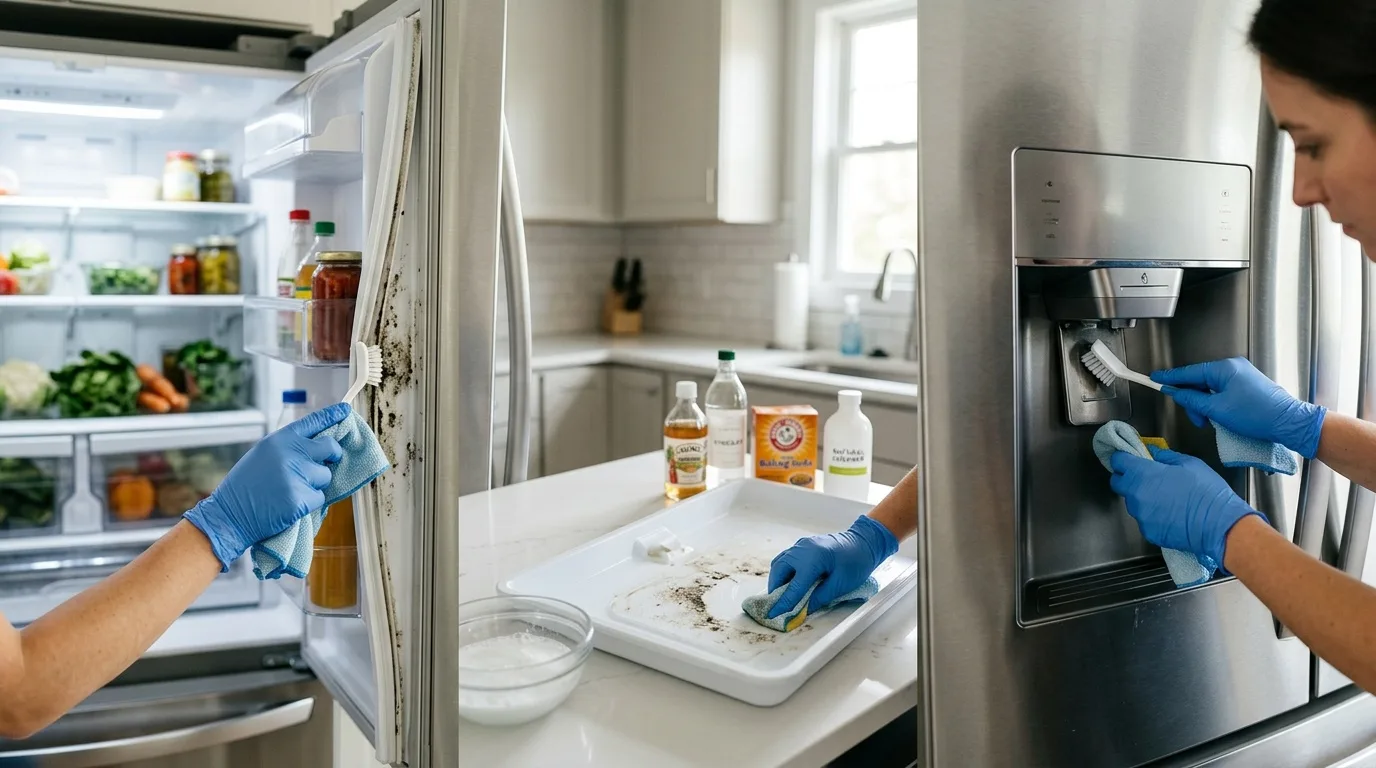
A refrigerator is an appliance no kitchen can do without, and without proper care it becomes a source of mold and dangerous bacteria. This guide covers why the fungus appears and how to keep the kitchen clean.
For many households the fridge is the heart of the kitchen, keeping food fresh day and night. But behind the clean outside of this appliance there is often a hidden health threat for the whole family. Many people are used to giving the inside a full cleaning only when sauce spills on a shelf or a strong, lingering smell appears.
Everyday use leads to a buildup of organic dirt you cannot see. Spilled drops of milk, crumbs from cooked dishes, bits of soil on unwashed vegetables - all of it becomes an ideal food source for harmful microorganisms. Bacteria and mold adapt well to low temperatures and start to multiply on plastic shelves and seals. It helps to do a quick check and a wipe of the main storage areas at least once a week.
Why Mold Grows in the Fridge
A mold colony needs two key conditions: moisture and organic material. Inside a refrigerator the moisture comes from condensation, spilled liquids and the ice maker. Leftover food and expired products give it an organic food source. When these factors come together, mold colonies can form in as little as 48 hours.
Where Mold in the Fridge Hides
- Door seals. The rubber gaskets and seals on the doors of the appliance.
- Water dispensers. The dispensers and the tubing of the water supply system.
- Door shelves. The shelves where sauces are kept.
- Drip pan and coils. The drain pan and the condenser coils.
During a full cleaning, pay special attention to the hidden areas most owners forget about. The rubber door seals, the drain hole that carries away condensation, and the drawers for fresh vegetables and herbs all need gentle but thorough care. It is in the folds of the rubber seal that black mold most often settles, and its spores circulate through the whole compartment every time the door opens and land on the food.
Mold in the Fridge Seal
The seal is the key part that keeps the freezer and the refrigerator airtight. It stops cold air from escaping and keeps warm air from getting in. Over time dirt, mold and germs can build up on the rubber, and this hurts the seal. Cold air leaks out, which means a higher electric bill. Not only dust and dirt collect on the surface of the gasket, but also various microorganisms, including mold. These things can noticeably hurt how the appliance works, raising energy use and lowering the quality of food storage. If you notice the door has become hard to close or cold spots appear, it may be a sign the seal needs cleaning right away. Regular cleaning of the seals helps keep food fresh and also extends the life of the appliance.
Not sure whether the dark spots on the gasket are mold or mildew? Our guide on telling black mold from mildew covers the difference.
How to Clean Mold in the Fridge, Step by Step
Before you start, empty the appliance of all food, unplug it and let it defrost for 10-15 minutes. To kill the fungus, you can use vinegar with 5-6% acidity or plant-based cleaners. Wipe the surfaces with microfiber cloths, which hold on to microscopic spores well. A deep cleaning also includes flushing the water lines and replacing the filter as the owner's manual describes.
While cleaning, use protective gear: an N95 mask, rubber gloves and safety glasses.
What to Clean the Seal With
When choosing products for the seal, go for ones that will not damage the material. A few options that work:
- Soapy water. A simple and safe choice. Use liquid soap or regular dish soap diluted in warm water. It removes dirt from the surface.
- Vinegar. A natural product that helps get rid of mold and bad smells. Dilute vinegar with water in equal parts. Vinegar has antimicrobial properties and fights bacteria.
- Specialized cleaners. There are products made specifically for caring for seals. They clean and at the same time protect the rubber from damage. Such products often contain conditioning ingredients that help keep it flexible.
Avoid abrasive cleaners and stiff brushes, since they can leave scratches and damage the seal. Also be careful with products that contain alcohol or chlorine, as they can wear the rubber down.
Cleaning the Gasket
- Preparation. Unplug the appliance so the door is not opened by accident during cleaning. Make sure any food that can spoil is moved somewhere else for the time being.
- Mix the cleaner. In a small container mix the soapy solution or the vinegar. If you use a specialized product, follow the directions on the package.
- Cleaning. With a soft cloth or sponge, carefully wipe the rubber. Pay special attention to hard-to-reach spots where dirt can collect. An old toothbrush or cotton swabs work for this. Remember that the movements should be gentle so the rubber is not damaged.
- Rinsing. Wipe the seal with a clean damp cloth to remove what is left of the cleaner. This helps avoid irritation of the rubber surface.
- Drying. Blot the seal with a dry cloth so mold does not form. Make sure the rubber is completely dry before you plug the appliance back in.
Protecting the Fridge Itself
Cleaning also calls for certain safety rules for the appliance. Harsh household chemicals with chlorine or abrasive powders can ruin the protective layer of the plastic for good and cause microcracks. It is safer to use mild dish gels, specialized sprays for refrigeration equipment or tried home methods based on baking soda.
Can you wash a fridge that is plugged in? Light wiping of the shelves and doors without unplugging is allowed if done quickly. But before a full washing, cleaning the back wall or the drain hole, or defrosting the compartments, the appliance must be unplugged for electrical safety and to keep the compressor from overheating.
Mold in the Refrigerator Ice Maker and Water Dispenser
The ice maker is one of the sources of moisture in the refrigerator, and the water dispensers and the tubing of the supply system are among the places where the fungus hides. That is why a deep cleaning is not finished with the shelves and the seal. It includes flushing the water lines and replacing the filter as the owner's manual directs.
When the Fridge Leaks onto the Floor
Water under a refrigerator usually comes from a clogged defrost drain, a cracked drain pan, or the supply line and filter of the ice maker and water dispenser.
Water that gets past the fridge and soaks the floor and the cabinets around it is a different job from wiping a shelf. If that has happened, read how water damage restoration in La Mesa works.
Is Mold in the Refrigerator Dangerous?
Spores and mycotoxins spreading inside the appliance lower the indoor air quality and create health risks. Contact with the fungus can cause allergic reactions, coughing, nasal congestion and asthma attacks. These microorganisms are especially dangerous for children, older people, pregnant women and people with weakened immune systems.
Regular cleaning of the inside compartments is not just a question of looks and no musty smell. In a fridge most bacteria grow slowly, but Listeria can still multiply at refrigerator temperatures. These bacteria can survive low temperatures and easily move from a dirty shelf to ready-to-eat food. Temperature and storage guidance is on the USDA's refrigerator safety page.
If a strong bad smell stays or mold keeps coming back, you need an expert's advice, since the fungus can get into the vents and internal parts of the appliance. When it has spread past the fridge, see what professional mold remediation involves.
Keeping It Dry: Prevention
- Deep cleaning. Clean the inside surfaces thoroughly every few months.
- Coils and drip pan. Clean the condenser coils and the drain pan regularly, as the owner's manual suggests, so dust and moisture do not build up.
- Spills. Wipe up any spilled liquid right away.
- Food. Keep track of expiration dates and use airtight containers.
- Cold. Keep the refrigerator at 40°F or below, because in the warmth the number of bacteria can double every 20 minutes.
How often a full cleaning with the fridge unplugged is needed depends on the type of cooling system and how heavily the appliance is used. Modern frost-free models need a deep cleaning at least two to three times a year.
Caring for the Seal
- Regular cleaning. Clean the rubber at least once a month. This helps prevent buildup of dirt and mold. Keep in mind that in summer, when the air is more humid, the seal should be cleaned more often.
- Keeping it flexible. From time to time treat the rubber with a thin layer of petroleum jelly or special care products for rubber. This helps keep it flexible and prevents cracks. Apply with a clean cloth and spread evenly over the surface.
- Checking for damage. Regularly inspect the seal for cracks or wear. If you notice damage, it is better to replace the gasket to avoid leaks.
- Avoiding sharp temperature changes. Try not to allow sudden temperature swings, which can damage the seal.
Order Inside and Odors
A well-organized interior keeps the appliance clean much longer between full cleanings. Storing cooked food in airtight containers, using special antibacterial mats in the vegetable drawers and throwing out food with an expiring date on time all help reduce the risk of contamination. A clean refrigerator works more efficiently and uses less electricity.
How do you get rid of a stubborn bad smell inside quickly? After washing the shelves well, put natural absorbents on the levels. Activated charcoal (a small dish of it is enough), dry baking soda, fresh coffee grounds or lemon peels absorb smells well. Leave them inside the closed appliance for 12-24 hours.
When the Problem Is Bigger Than the Fridge
A moldy gasket is a cleaning job. A leak that has run under the cabinets, or mold that keeps coming back in the kitchen, is not. More about mold, water and kitchens is on our restoration blog for homeowners. If the kitchen has to be emptied before work, here is how our pack-out and contents service handles belongings. You can read who we are and how we work, see what La Mesa homeowners say about us, or start from the La Mesa restoration home page.