

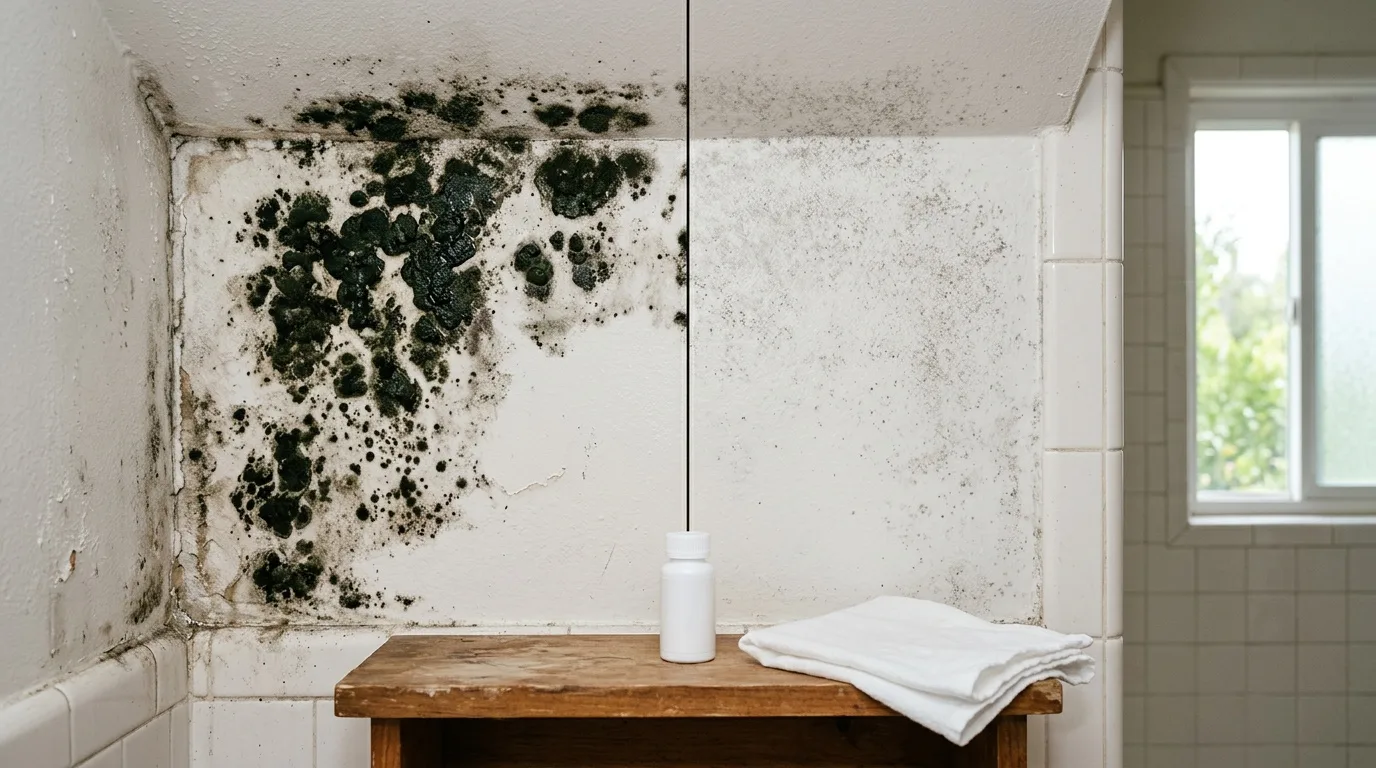
What Is Mold and How Does It Get Into Your Home
Mold is one of the oldest organisms on the planet. Its spores can survive extreme temperatures and travel vast distances through the air. But for active growth, mold needs just two things: warmth and high moisture. The foundation of any mold colony is the mycelium — a network of microscopic threads that anchors itself to a surface and penetrates deep into its structure.
In La Mesa, where summer humidity can build up in poorly ventilated bathrooms and kitchens, mold finds plenty of favorable conditions. Organic materials like wood serve as ideal food sources, though mold colonizes stone, drywall, and tile grout just as readily.
Under a microscope, mold looks like a mass of thin filaments with small spheres at the tips — those spheres hold the spores. The spores drift through the air constantly, mixed in with household dust. When they land on a damp surface and the temperature stays above roughly 68 °F, they swell, germinate, and a visible colony begins to form.
How to Spot Mold Before You See It
There are a few warning signs that mold may be present in a home even before dark patches appear on a wall or ceiling:
- Food — especially bread — goes stale or spoils faster than usual
- The air in certain rooms feels heavy or stale despite regular cleaning
- Clothes and towels stored in closets stay slightly damp
- Household members develop persistent sneezing, coughing, watery eyes, or skin irritation that clears up when they leave the house
- A musty, earthy smell lingers, especially in bathrooms, laundry areas, or near exterior walls
If you notice a smell of dampness that does not go away after cleaning, that alone can be a first signal. Symptoms resembling allergies or a cold that persist only while you are inside the house often point to mold as well.
Black Mold: What It Actually Is
"Black mold" is a collective name for several species of microscopic fungi whose colonies appear as dark, often slimy patches. The most common culprit is Aspergillus niger, though Alternaria alternata, Stachybotrys chartarum, and others fall under the same umbrella. Spores of these fungi are practically invisible and float in the air everywhere, but they only germinate and form visible colonies where conditions are right.
Black mold is the type most frequently found in homes. There are several subtypes worth knowing about:
- A form with a white mycelium base and black spores — can colonize nearly any surface and is associated with aspergillosis, a serious lung infection
- The genus Phoma, which has a dark mycelium but lighter spores, classified in the fourth pathogenicity group
- A subtype that favors wood and, when its spores are ingested or inhaled, can cause gastrointestinal problems
- A fast-spreading subtype that is relatively harmless to humans
- Subtypes whose spores appear light at first and darken over time — generally not dangerous to people
Because so many different fungi produce dark colonies, identifying the exact species usually requires laboratory testing. For a La Mesa homeowner, the practical takeaway is simpler: any dark, spreading patch on a wall, ceiling, or grout line should be treated seriously.
Mildew: the Lighter, Surface-Level Growth
In everyday language, "mildew" typically refers to lighter-colored mold growth — white, gray, or greenish — that stays on the surface of a material rather than boring deep into it. Scientifically, mildew is still a fungus, but it tends to be less aggressive than the organisms we call black mold.
White mold (Mucor)
White mold's scientific name is Mucor. Its main habitat is soil, from which spores migrate onto plants, food, and eventually indoor surfaces. White mold frequently colonizes cheese, bread, and baked goods. It does not pose a severe immediate threat, but prolonged exposure — especially for someone with a weakened immune system — can lead to internal organ damage. Infection occurs through the respiratory tract or, less commonly, through the bloodstream.
Green mold
Green mold belongs to the ascomycete family and settles on organic materials, soil, and compost. Visually it resembles moss with an uneven, velvety surface and a saturated green tint. Its primary targets are food products — vegetables, fruits, and fermented dairy. The mycelium penetrates deep, so simply cutting away the visibly affected layer of a product is not enough; the item should be discarded.
Pink mold
Pink mold does not anchor itself firmly to walls or ceilings. It usually appears on improperly stored food — vegetables, fruit, grains — and then migrates to hard surfaces without penetrating the material. Pink mold itself is not particularly harmful, but food it has colonized should not be eaten.
Black Mold vs Mildew: Key Differences
Appearance
Black mold forms dark, often slimy patches that range from deep green-black to solid black. Mildew is typically white, gray, or pale green, and its texture is powdery or downy rather than slimy. Black mold patches tend to look irregular with fuzzy edges, while mildew often forms a thin, relatively even film.
Depth of penetration
This is the most important practical distinction. Mildew generally sits on the surface of a material. You can often wipe it away with a damp cloth and a household cleaner. Black mold, by contrast, sends its mycelium deep into porous materials — drywall, wood framing, grout, even concrete. Scrubbing the visible patch removes only what is on the surface; the root network remains inside.
Where each one appears
Mildew is common on shower curtains, window sills, tile surfaces, and the rubber gaskets of washing machines — places that get wet and then partially dry. Black mold prefers consistently damp spots that rarely see light or airflow: behind furniture pushed against exterior walls, under sinks, inside wall cavities after a leak, on ceiling drywall above a bathroom. In La Mesa, homes with older HVAC systems or single-pane windows are especially prone to condensation on interior walls, which creates the persistent dampness black mold needs.
Speed of spread
Mildew appears relatively quickly but also responds quickly to cleaning and drying. Black mold develops more slowly, but once established it is far harder to eliminate. Its spores anchor deep and can remain dormant for years, reactivating when moisture returns.
Why Black Mold Is More Dangerous
All types of mold can trigger allergic reactions — runny nose, coughing, skin rashes. But black mold poses additional risks. The genus Aspergillus niger is associated with lung disease, allergic reactions, and otomycosis (fungal ear infection). Stachybotrys chartarum produces mycotoxins — toxic chemical compounds that the colony continuously releases into the air along with its spores.
Diseases and conditions linked to prolonged mold exposure include:
- Laryngitis and tracheitis
- Chronic bronchitis and bronchial asthma
- Pneumonia
- Allergic rhinitis and conjunctivitis
- Dermatitis and eczema
- Stomatitis
- Persistent headaches, nausea, dizziness
- Gastrointestinal disorders
In severe, long-term cases, mold exposure has been linked to pulmonary emphysema, internal bleeding, and organ damage. Children, elderly residents, pregnant women, and anyone with a compromised immune system are at the highest risk.
Common Causes of Mold Growth in La Mesa Homes
The reasons mold shows up in a house are usually straightforward, and often several of them act together:
- Poor ventilation — especially in bathrooms and kitchens. Tight-fitting modern windows are energy-efficient but trap moisture indoors if there is no mechanical ventilation or regular airing
- Water leaks — a dripping faucet, a slow pipe leak behind a wall, or a roof leak all raise indoor humidity enough for mold to take hold
- Condensation — when warm indoor air meets a cold wall or window, moisture forms on the surface. Exterior walls with poor insulation are classic problem spots
- Ground moisture — homes with slab foundations or crawl spaces that lack proper vapor barriers can wick moisture upward into floors and lower walls
- Insufficient heating or cooling — surfaces that stay cool while the surrounding air is warm will collect condensation
Even something as seemingly harmless as a wet kitchen towel left bunched up on a counter can trigger mold growth if conditions are right.
What to Do If You Find Mold
Small patches of mildew
If the affected area is small — a bit of mildew on tile grout, a shower curtain, or a window sill — household cleaning solutions usually suffice. Options include:
- White vinegar, applied undiluted and left for about an hour before wiping
- A 3% hydrogen peroxide solution, left on the surface for 10–20 minutes and then rinsed
- A baking-soda solution (half a tablespoon of soda per pint of water), sprayed on and wiped
- Tea tree oil mixed with water and a pinch of salt, applied to the area and left for an hour
After cleaning, the most important step is eliminating the moisture source: fix the leak, improve ventilation, run a dehumidifier.
Established black mold
When black mold has penetrated drywall, wood, or plaster, surface cleaning will not solve the problem. The general approach is:
- Identify and fix the moisture source first — there is no point treating mold while water continues to feed it
- Remove affected materials: peel wallpaper, scrape loose plaster, strip paint down to the substrate. Mist the surface with water before scraping to keep spores from going airborne
- Treat exposed surfaces with a fungicidal product according to the label. Multiple coats, each allowed to dry fully, are usually needed
- Wait at least 24 hours before reapplying plaster or paint. Use products that contain antifungal additives
During the entire process, wear rubber gloves, a respirator mask, and long sleeves. Ventilate the room and remove furniture or cover it.
If the affected area is larger than roughly ten square feet, most experts recommend hiring a professional mold remediation company rather than handling it yourself.
A note on mixing cleaning agents
Never combine different mold-removal products. Mixing vinegar with hydrogen peroxide, for instance, produces peracetic acid, which can burn skin, eyes, and mucous membranes. Bleach-based products mixed with ammonia release toxic chloramine gas. Use one product at a time, rinse, and ventilate.
Preventing Mold From Coming Back
The most reliable prevention comes down to controlling moisture:
- Air out bathrooms and kitchens daily; consider installing an exhaust fan if one is not already present
- Keep indoor humidity between 40% and 60% — a simple hygrometer from a hardware store will tell you where you stand
- Do not dry laundry indoors in rooms without ventilation
- Check plumbing and appliance connections regularly for slow leaks
- Leave a gap between large furniture pieces and exterior walls so air can circulate
- Wipe down surfaces prone to condensation — window frames, tile grout, the gasket of a front-load washer — at least once a month
- When remodeling, use moisture-resistant drywall and primers with antifungal additives in wet areas
Mold spores are everywhere and cannot be eliminated entirely. The goal is not a sterile house — it is a dry one. Remove the moisture, and mold simply cannot establish a colony.
This site is La Mesa-focused; for the wider operation behind it, see the La Mesa page of our main site.