

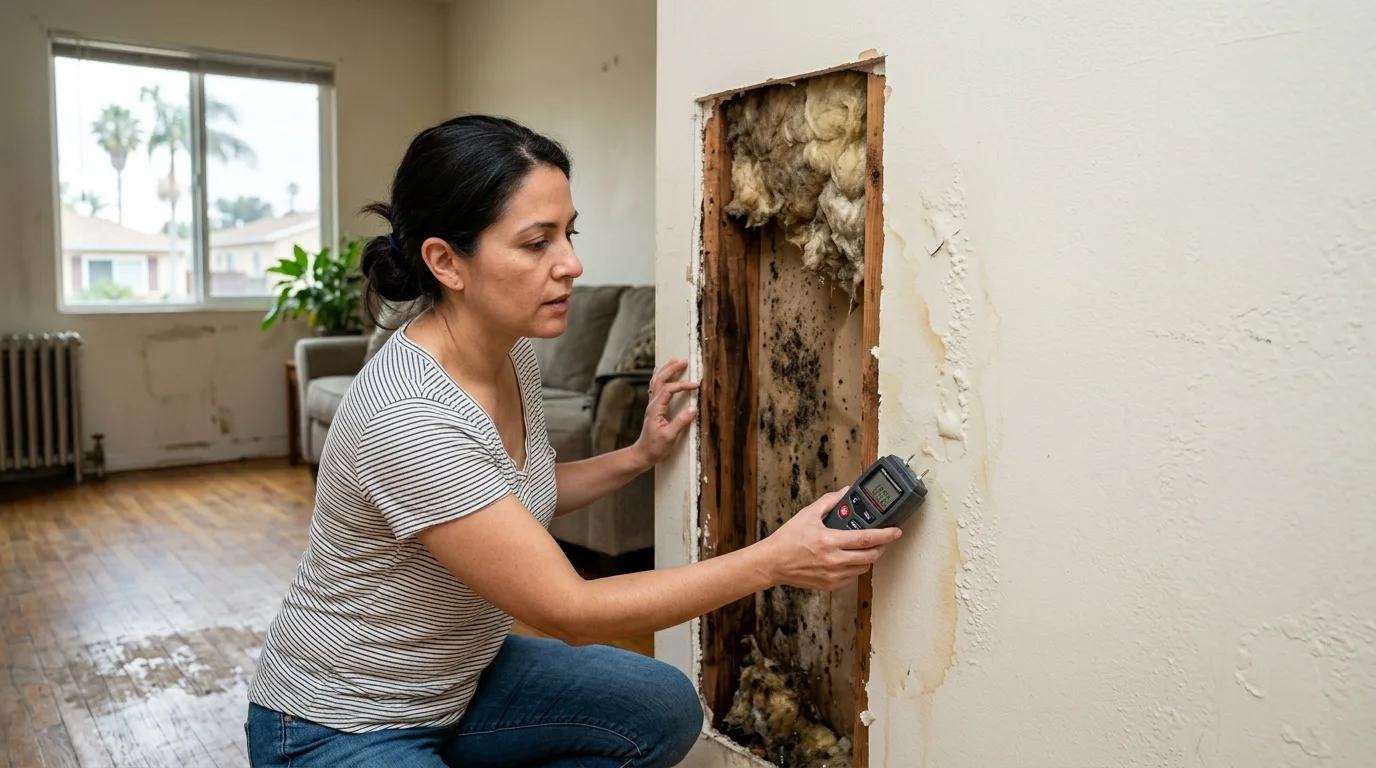
Why hidden water damage is hard to spot
Water leaks and floods are a fairly common problem that any homeowner can face. They can arise for many reasons, including aging pipes, damage during renovation, or improper plumbing installation.
In some cases, water leaks are obvious — you notice water spraying from under a pipe or see it dripping from the ceiling. However, there are also hidden leaks that may not be visible at all. They can cause cracks in walls, especially near pipe runs, triggering unexpected repairs and potentially affecting your health.
The issue is that over the past couple of decades, contractors have increasingly hidden pipes inside floor slabs and walls during construction and remodeling. Homeowners did not want to see exposed pipes, so builders concealed them. This has led to a situation where, due to improper installation techniques or low-quality materials, the homeowner ends up with a serious problem: water seeping from somewhere inside the floor, walls, or ceiling with no obvious source.
Visible signs of hidden water damage behind walls
You notice damp or wet spots on the ceiling, walls, or floor. Pay closer attention when inspecting wet zones in your home — the kitchen, bathrooms, and areas with radiant floor heating.
You may also discover yellowish or rusty stains. These indicate a leak that occurred earlier but stopped for some reason. The stains are traces of the water drying out, and they often appear as brownish rings or discoloration on painted surfaces.
You see that the paint or plaster on the walls or ceiling has begun to crack and peel, or wallpaper is lifting and coming unglued. This is a sign of excess moisture behind the wall or above the ceiling. When water gets inside wall cavities, it gradually saturates the drywall or plaster, and the surface finish loses its bond with the substrate.
You find mold or mildew on the ceiling, walls, or floor. This is also a consequence of excessive humidity whose source appeared some time ago and has been constant. In La Mesa's warm climate, mold colonies can establish themselves within five to seven days once moisture is present behind a wall.
You notice a bulging floor, raised spots in the slab, wall deformation, or foundation damage in the form of new cracks. In some cases you may also observe soil settling around the foundation.
Sounds that point to a leak inside a wall
You hear the noise of running water, a hissing sound, or the sound of dripping, yet all faucets and shutoff valves are closed. The sound comes from behind a wall, under the floor, or from the ceiling, and you cannot locate the source. To confirm a hidden leak, make sure the sound is audible continuously when all valves are shut.
This is often one of the earliest and most reliable clues. Many La Mesa homeowners first notice it at night, when background noise is minimal and the house is quiet enough to pick up the faint hiss of water escaping a pressurized line inside a wall cavity.
Smell as a warning sign
You detect an unpleasant odor near the paths of water supply or drain pipes. It may be the smell of mold and mildew that has already developed due to prolonged excessive moisture, or a stale, musty smell of dampness caused by moisture that has already soaked into building materials — drywall, wood framing, plaster, wallpaper.
A persistent musty odor that does not go away after airing out the room is one of the most reliable hidden signs of water damage behind walls. The smell tends to intensify in enclosed spaces such as closets or cabinets that share a wall with a bathroom or kitchen.
Changes you can measure
You observe a drop in water pressure when you fully open a faucet. Make sure there are no issues on the main supply line and verify that the municipal water system is operating normally. Most likely there is a leak in your plumbing, and water is escaping somewhere it should not. Because of low pressure in the pipe, a bathtub will also take longer than usual to fill.
You track your water meter readings and notice they have increased significantly compared to previous periods. You observe water consumption even when no water is being used in the house. Make sure the meter itself is functioning properly. If you have a well with a pump, listen for whether the pump runs when all faucets are shut.
You receive water bills with figures substantially higher than in prior months. If the amounts in the suspicious bill are accurate, it is time to look for a hidden water leak. In La Mesa, where water rates have been climbing, an unexplained jump in usage is worth investigating promptly.
What happens if a hidden leak is not found in time
Hidden leaks inside walls can lead to a whole range of problems that can turn out to be quite serious. They can cause various types of damage, including compromised wall integrity, deterioration of painted surfaces and wallpaper, and they may even attract insects and rodents that are drawn to damp environments.
Most importantly, hidden leaks can trigger the growth of mold and elevated humidity levels, which not only harm your health but can also disrupt overall air circulation in the home. Mold spores are capable of causing allergic reactions, worsening asthma, and provoking respiratory problems. Black mold is especially dangerous because it releases toxic mycotoxins.
If a hidden leak is not discovered and addressed in time, it can cause serious harm not only to the walls but also to drywall ceilings and the structural framing inside the walls. Under drywall specifically, the surface begins to sag, small bubbles form, and downward-facing ruts develop. If the drywall has absorbed a large amount of water, it starts to bow outward. In an extreme case, a long-running hidden leak can become the cause of a complete structural failure of the affected section of the building.
How professionals find hidden water damage
For detecting all leaks it is best to have a thermal imaging survey conducted by professionals. A thermal camera is one of the most effective tools for identifying problem zones, making invisible wet areas visible to the human eye. Specialists use a combined method of leak localization: a high-precision thermal imager together with a pulse moisture scanner. At this point this survey method is considered the most accurate, giving a probability of localizing a leak of up to eighty percent.
Moisture meters can detect moisture accumulation in porous materials at depths of up to four inches, and in concrete up to about two inches. These instruments let a technician map the extent of hidden water damage without tearing open the wall — an important consideration before committing to demolition.
Acoustic leak detectors pick up the sound created by water escaping under pressure. Even when the flow rate is small and the leak produces no visible signs on the surface, the acoustic signature can pinpoint the location within a wall or under a slab.
What La Mesa homeowners should do next
If you have found any of the signs described above, you can try to locate the leak on your own. It is possible that it is not hidden and you will be able to find it yourself. Carefully inspect all rooms, especially those containing wet zones, using the indicators listed here. It is a good idea to carry out this kind of inspection on a regular basis — at least once or twice a year.
However, if you cannot solve the problem on your own, contact a water damage restoration specialist without delay. Remember that leaks that are not addressed in time can lead not only to property damage and unnecessary expenses but also to health problems for everyone living in the home. In La Mesa's older neighborhoods, where many homes date to the 1950s through 1970s, original copper and galvanized supply lines are reaching the end of their service life, making periodic inspection especially important.